
A garden folly is a building with no job. The word comes from the French folie, foolishness, and for once the name is fair. In the great English gardens of the eighteenth century, these things went up by the dozen: towers that guarded nothing, temples to no god, arches that framed a view and did nothing else. We named our studio after them on purpose, and this is the short version of why.
Key takeaways
- A garden folly is a decorative building made to look like it has a purpose it does not have.
- English estates built follies by the dozen in the eighteenth century, after the Grand Tour made Roman ruins fashionable.
- Form Folly designs the same way: shape first. Each piece then has to prove it works every day before it goes on sale.
- Every piece is made to order, then made and shipped in 1 to 2 business days.
What Is a Folly, Exactly?
A folly is a decorative structure built to look like it has a purpose it does not have. That is the whole definition, and it covers a lot of ground. Some are mock Roman temples sitting at the end of a gravel walk. Some are sham ruins, built already broken so they would look ancient the day they were finished. There are pyramids, pagodas, and a fair number of towers you cannot climb.
The one thing they share is placement. A garden folly sits where the eye lands, at the end of a path or across a lake, so that walking toward it feels like the point of the walk. Landscape designers called them eyecatchers, which is the least pretentious word anyone has used for a building.
Why Did the Eighteenth Century Build So Many?
Follies were fashionable because young aristocrats came home from the Grand Tour wanting Italy in the backyard. They had seen ruined temples outside Rome and wanted one of their own, minus the two thousand years of waiting. So they hired someone to build a ruin from scratch.
It was expensive, impractical and beloved, all at once. The people who paid for these things understood something we keep having to relearn: delight is a function. A path is better with something at the end of it, even if the something is a tower with no stairs.
What a Folly Taught Us About Small Objects
The order of operations is the lesson. Folly architecture puts shape first and finds a use second, if it finds one at all. We do the first half the same way and then insist on the second.
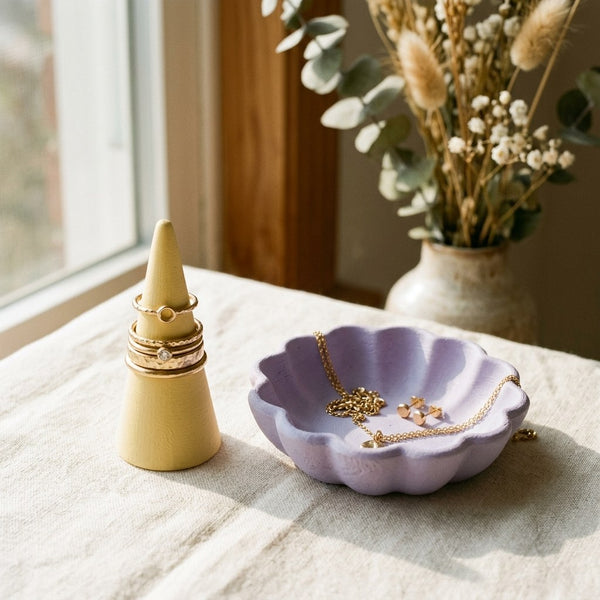
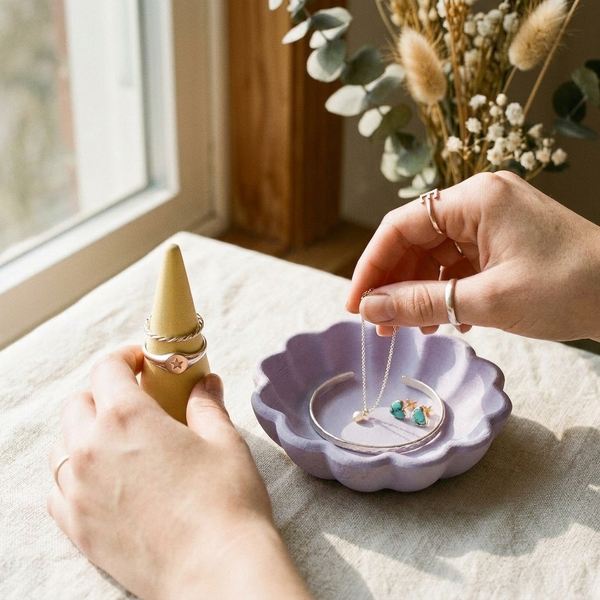
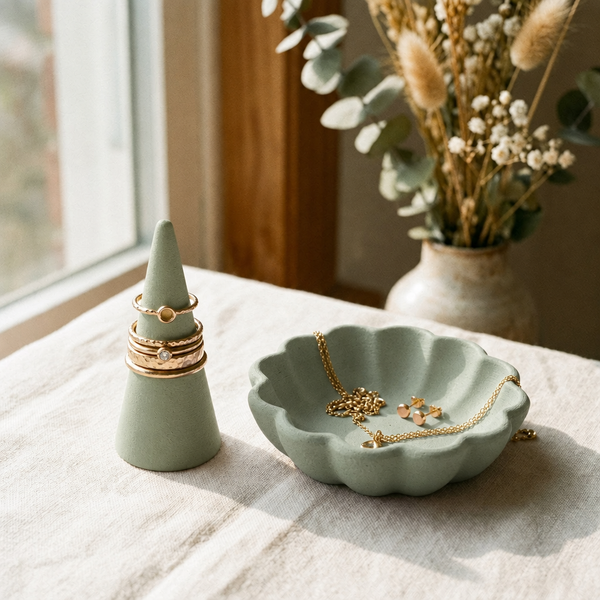
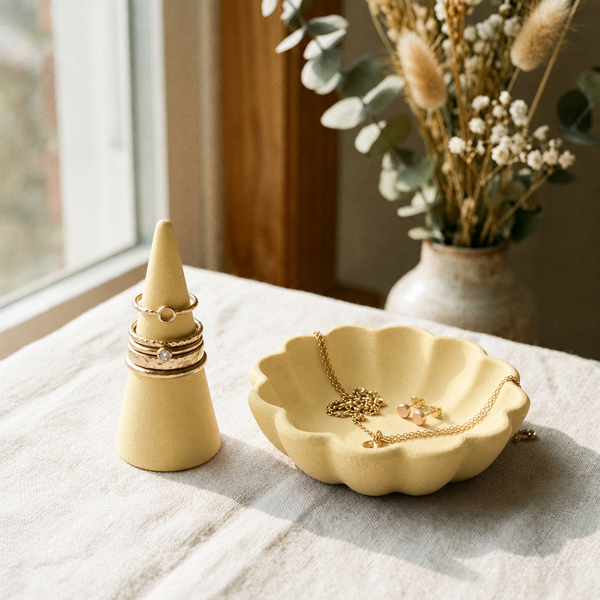
Every object we make starts as a shape we want to look at. A hair comb built like a colonnade. A jewelry dish that stands like a tiny amphitheater. Then it has to earn its place: hold a ring, pin a bun, or stand a card upright, every day, without complaint. If it cannot do that, it stays a sketch. You can see the results across the whole catalog, and the vanity pieces in particular, like The Ring Leader, are the ones that look most like a small building.
There is one more thing the follies get right. Plenty of them are still standing three hundred years on, long after the barns around them came down. The useless thing outlasted the useful ones, because somebody loved it enough to keep it up.
Conclusion
A garden folly is proof that an object can be worth keeping for how it looks, as long as it is made well enough to last. That is the standard we hold every piece to, and the reason the name felt right. If you want to see what a folly looks like at desk scale, start with Vanity & Storage. Each piece is made after you order it, and made and shipped in 1 to 2 business days.
FAQ
What does the word folly mean in architecture?
In architecture, a folly is a building made mainly for decoration, often designed to suggest a purpose it does not actually serve. The word comes from the French for foolishness. Common forms include towers, sham ruins, small temples, grottoes and obelisks.
Where can I see a real garden folly?
England has the largest concentration. Stowe in Buckinghamshire and Painshill in Surrey both have several, and Broadway Tower in the Cotswolds is one of the best known. In the United States, a handful of estate gardens from the early twentieth century copied the idea.
Why is Form Folly called Form Folly?
Because we design the way those eighteenth-century architects did: form first, then function. A garden folly is shape for its own sake. Our objects start the same way, then have to prove they can hold, clip, carry or stand before we sell them.
Are your objects decorative or useful?
Both, and in that order. Almost every piece is designed to be looked at first and then to work as a dish, a clip, a hook or a stand. A few, like the Boo Crew ghosts, are there purely to be looked at.