
A trinket dish is the cheapest organizing system there is. It has no lid, no label and no rules, which is exactly why things end up in it. Here are the five places a shallow dish earns its spot, and what goes in each one.
Key takeaways
- A trinket dish works because it keeps small things visible and takes no effort to use.
- Keep a ring dish beside the sink you use most. That is where rings go down the drain.
- A small, shallow tray by the door holds keys and a card without filling up with receipts.
- A two-part dish like The Ring Leader keeps earrings from tangling with rings.
- Wipe dishes with a soft dry cloth. They are not dishwasher safe.
What Is a Trinket Dish For?
A trinket dish is for the small things you take off, put down, and need again tomorrow. Rings, keys, earrings, the one card you actually use. It works because it lowers the bar: you do not have to open anything or decide anything, you just drop the object in and it stays visible.
That visibility is the whole trick. A drawer hides things and a catch-all tray shows them, so you stop searching.
#1 By the Sink: Rings
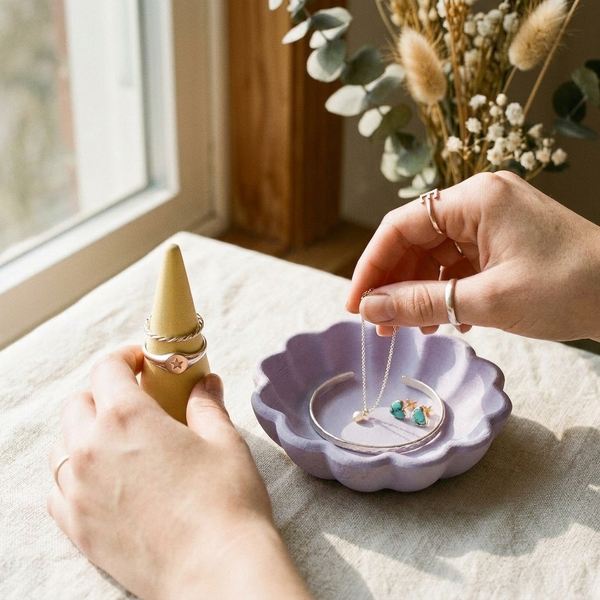
A ring dish beside the kitchen or bathroom sink saves rings from the drain. You take them off to wash your hands, they go in the dish, and they are still there when your hands are dry.
Pick something with a lip that stays put. A dish that slides on a wet counter is worse than no dish.
#2 By the Door: Keys and the One Card
Put a catch-all tray on the console or shelf nearest the door and it becomes the drop zone. Keys, the transit card, the single credit card you carry, sunglasses.
The test of a good entry dish is whether you use it without thinking. If you have to lift a lid, you will not. If it holds too much, it fills with receipts. Shallow and small beats deep and generous here.
#3 By the Bed: Earrings
Earrings come off at the last possible moment, usually in the dark. A trinket dish on the nightstand catches both before one of them ends up in the sheets.
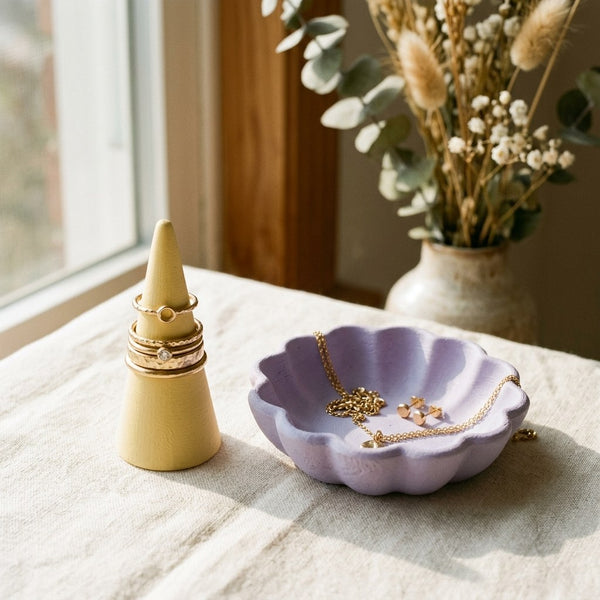
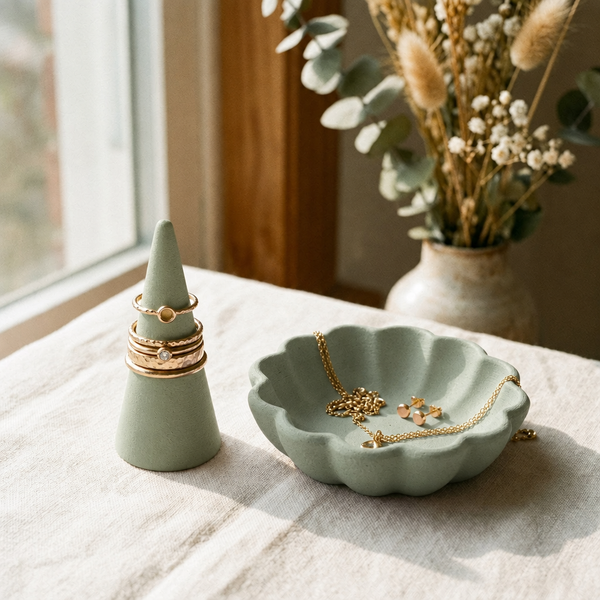
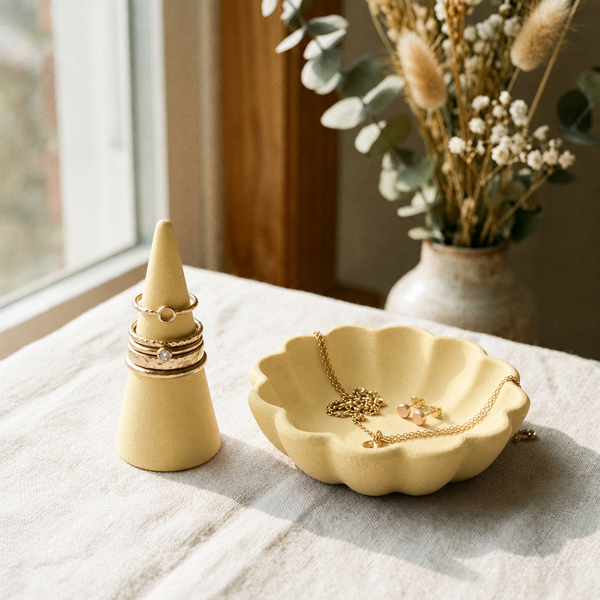
A two-part dish helps. The Ring Leader pairs a cone for rings with a scalloped dish for the rest, so studs and hoops do not tangle with a stack of bands.
#4 On the Desk: Whatever You Are Fidgeting With
Paperclips, a hair tie, the cap from a pen, an AirTag between bags. A desk dish gives your hands a place to put things down mid-thought.
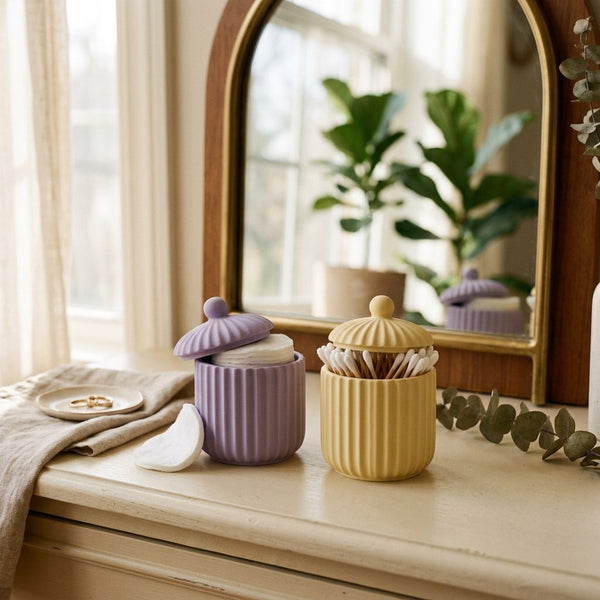
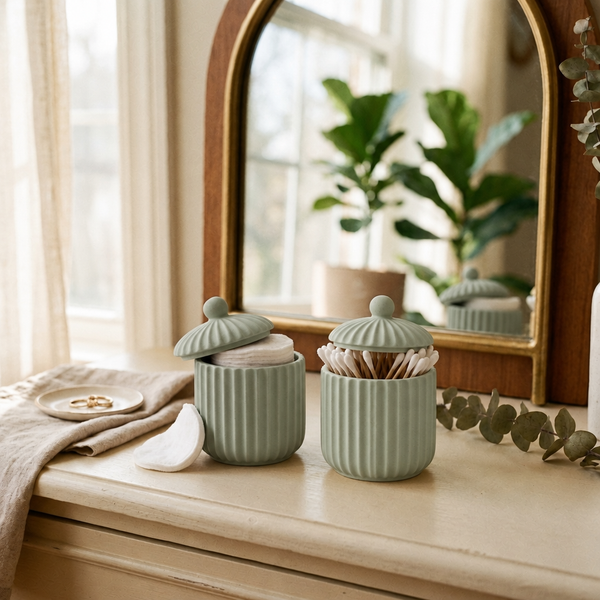
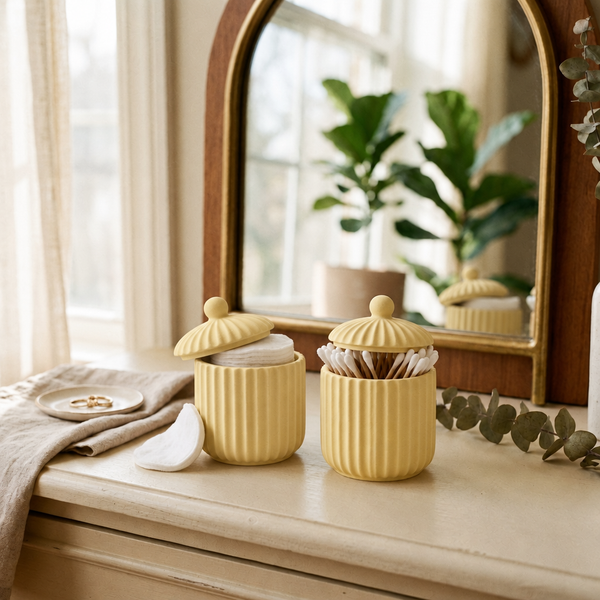
This is where a lidded pot works better than an open dish, because desk clutter multiplies. Powder Room is a pair of lidded fluted pots made for cotton pads and swabs, and it works just as well for cables and clips.
#5 On the Shelf: Nothing at All
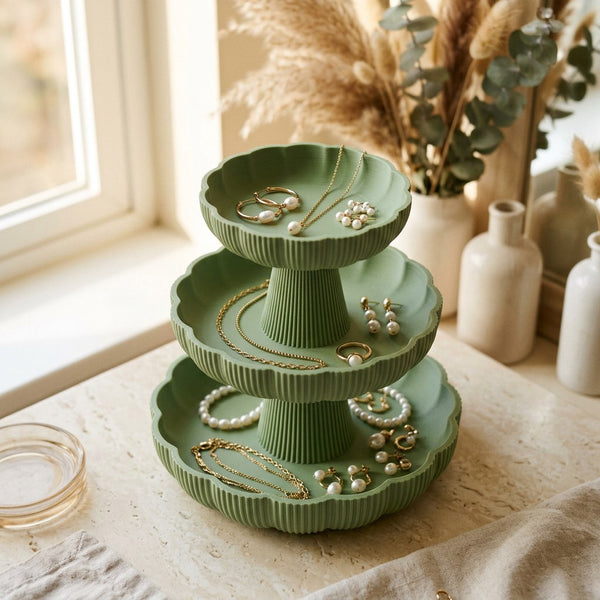
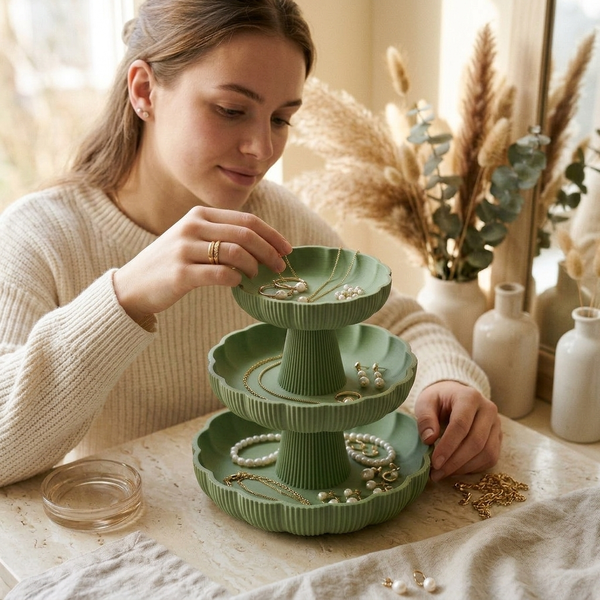
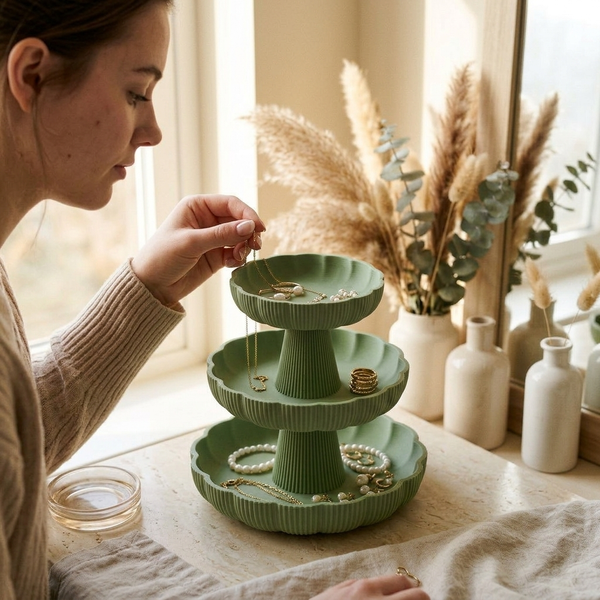
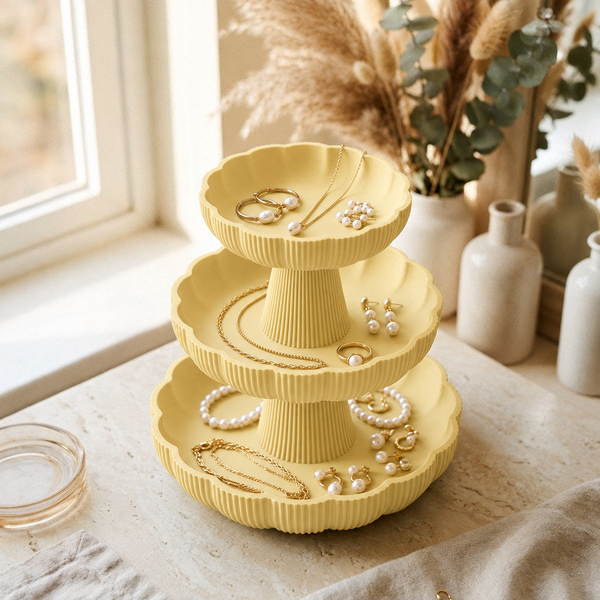
An empty trinket dish on a shelf still looks like something. It reads as a small sculpture, which is the point of a fluted, scalloped or tiered shape. The Overachiever is three tiers of scalloped dishes. Jewelry on the top tier and nothing on the other two is a perfectly good way to use it.
Conclusion
Five dishes means five fewer places to lose a ring. Start with the one by the sink, because that is where rings go missing, and add the others as the habit forms. Most dishes in Vanity & Storage come in six colorways, and every one is made to order in Texas.
FAQ
What is the difference between a trinket dish and a ring dish?
A ring dish is a trinket dish shaped for rings, usually with a cone or post in the middle to stack them on. A plain dish holds anything small. If rings are the main thing you take off, get the cone. If it is a mix, get the flat dish.
What size should a catch-all tray be?
Small enough that it cannot become a junk drawer. A shallow dish that fits your keys, a card and a pair of sunglasses is about right. Anything bigger fills up with receipts.
Can I put a trinket dish in the dishwasher?
Not ours. Wipe them clean with a soft cloth. Dishwasher heat can warp the shape and dull the finish.
Where should I keep a ring dish?
Beside whichever sink you wash your hands at most. That is where rings come off and where they go down the drain. A second one on the nightstand covers the rest of the day.